A professional facial is not simply a way to relax. For men dealing with clogged pores, persistent shaving irritation, uneven texture, or skin that feels dry despite daily care, it can be a practical introduction to better skin maintenance. The experience is more straightforward than many first-time clients expect.
Men’s facials are designed around the condition of the skin rather than a fixed routine. From the initial skin assessment to cleansing, targeted treatment, and aftercare, each stage has a purpose. Understanding what happens during an appointment can help you arrive prepared, ask better questions, and choose a treatment that suits your skin.
Quick Answer
A men’s facial is a professional skincare treatment that typically includes a skin assessment, cleansing, customized exfoliation, targeted skincare, hydration, and finishing protection. Depending on your concerns, an esthetician may adjust the treatment for excess oil, clogged pores, dry skin, shaving irritation, or visible signs of aging. The experience is generally comfortable, although certain exfoliation techniques may cause temporary sensitivity. The best facial is suited to your skin’s condition, tolerance, and maintenance goals.
Key Takeaways
- Every facial begins with your skin. A professional assessment helps determine which products and techniques are appropriate.
- Shaving habits matter. Razor irritation, ingrown hairs, and sensitivity around the beard area can influence treatment selection.
- Not every facial requires aggressive exfoliation. Gentle cleansing and hydration may be more appropriate for compromised or reactive skin.
- Downtime depends on the treatment. A basic custom facial usually involves less recovery than a stronger chemical peel.
- Maintenance continues at home. Consistent cleansing, moisturizing, sun protection, and sensible shaving practices support long-term skin health.
Why Men’s Skin Deserves a More Individual Approach
Men’s skin often differs in characteristics such as thickness, oil production, facial hair distribution, and exposure to shaving. Hormonal influences can contribute to higher sebum production, while regular shaving introduces repeated friction to areas around the cheeks, jawline, and neck.
However, these general differences do not mean every man has oily, resilient skin. Some experience persistent dryness, others develop congestion, and many have a combination of concerns that change with age, climate, or daily habits.
A man who shaves every morning may require a different approach from someone who maintains a full beard. Likewise, a client working outdoors in Central Florida may have different skin concerns from someone spending most of the day in an air-conditioned office.
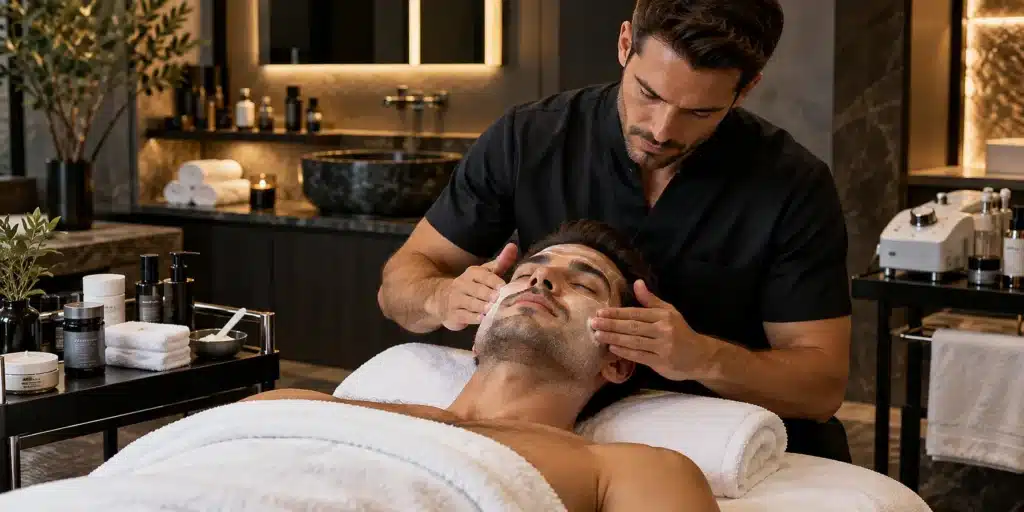
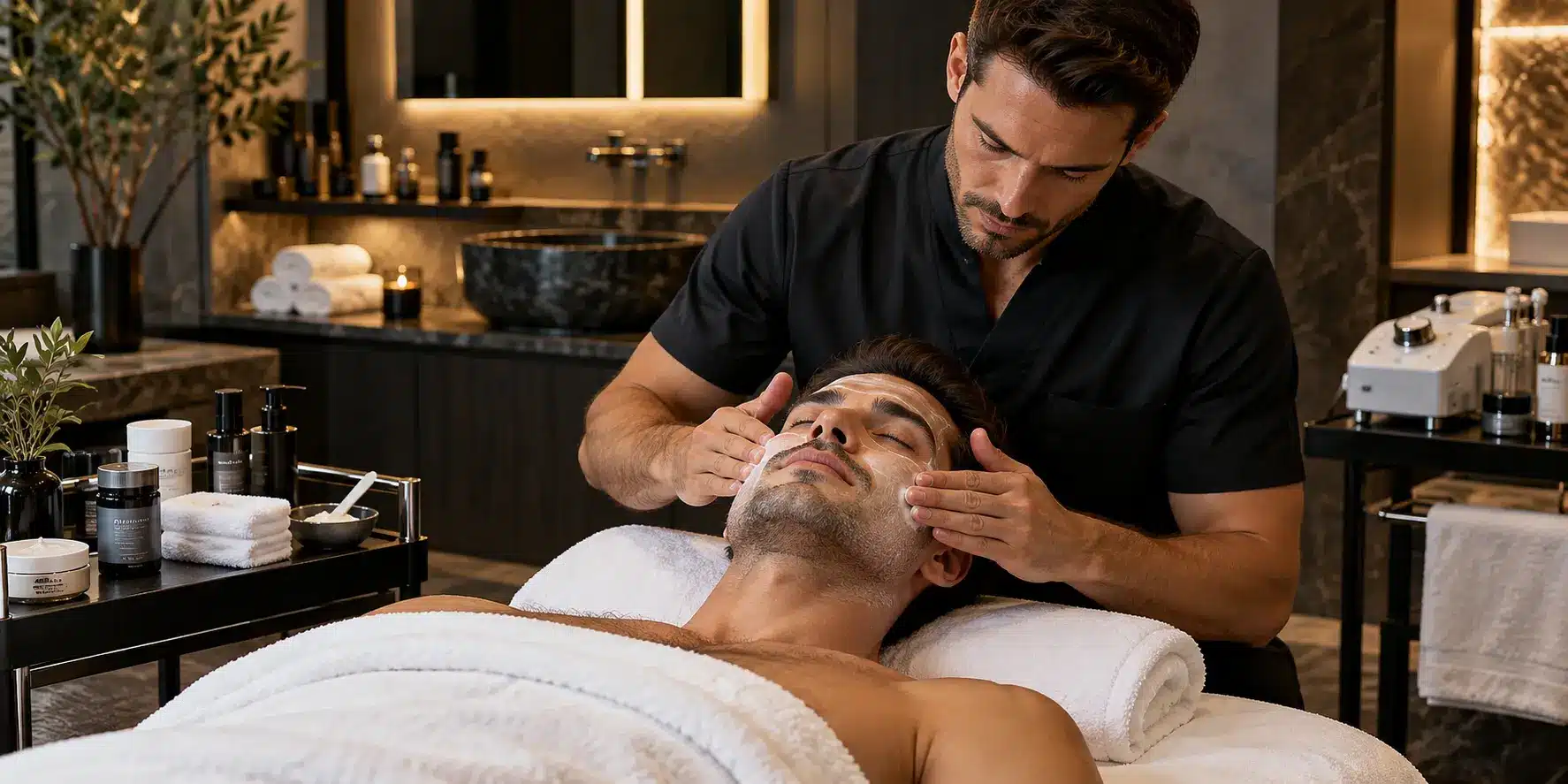
The most useful facial starts with the individual, not assumptions about men’s skin. At Éternité Spa, custom facial treatments are structured around professional assessment and personalized product selection rather than a single protocol applied to everyone.
“Men often assume their skin can handle aggressive scrubbing because it’s thicker, but frequent shaving already disrupts the skin barrier. Our goal during a custom facial is to balance deep follicle cleansing with intense hydration to calm razor sensitivity.”, Lead Esthetician, Éternité Spa
What Actually Happens During Your First Men’s Facial?
For a first-time visitor, knowing the sequence can make the experience feel considerably more familiar. A standard facial follows several stages, although specific techniques depend on the treatment and what your skin can tolerate.
A Conversation Before the Treatment Begins
Your esthetician will generally begin by asking about your skin concerns, daily routine, shaving habits, and products currently in use. They may also ask about sensitivity, allergies, previous treatments, medications, or recent sun exposure.
This information helps identify potential irritation triggers and determine whether exfoliation or other treatment techniques should be adjusted. Explaining that your face feels tight after washing, that your forehead becomes oily by midday, or that shaving leaves uncomfortable bumps is useful information.
Cleansing Away Daily Buildup
The next stage usually involves professional cleansing to remove surface oil, sweat, sunscreen, and environmental debris.
Unlike repeatedly washing with a harsh cleanser at home, professional cleansing accounts for the skin’s existing moisture balance. Removing excess oil is useful, but stripping too much can leave the skin feeling dry and uncomfortable. For clients with facial hair, the practitioner may also adjust the cleansing technique around the beard and hairline.
Exfoliation, When the Skin Is Ready
Exfoliation removes accumulated dead cells from the skin’s surface and can help improve the appearance of roughness and dullness.
The method may involve mild exfoliating ingredients or carefully selected professional techniques. However, recent shaving, active irritation, inflamed breakouts, or a weakened skin barrier may make stronger exfoliation inappropriate. More exfoliation does not necessarily mean better results; the goal is to improve surface texture without causing unnecessary irritation.
Targeted Treatment for Your Main Concern
After cleansing and any appropriate exfoliation, the esthetician may use selected serums, masks, or other skincare techniques to address the concerns identified during the assessment.
For example, a client with dry skin may benefit from a treatment focused on replenishing moisture, while someone with visibly congested pores may need a different approach. Extractions may be considered when appropriate, but they are not an automatic part of every facial.
Hydration, Protection, and Practical Advice
The final stage generally includes moisturizer and appropriate sun protection. Your esthetician may also recommend adjustments to your daily skincare or shaving routine.
At Éternité Spa, the published custom facial protocol follows this broad sequence, with skin consultation, cleansing and exfoliation, targeted care, and a hydrating finish. The studio lists a treatment duration of approximately 30 to 60 minutes, depending on the custom facial selected.
The Concerns That Bring Men Into the Treatment Room
Men book facials for different reasons. Some want help managing persistent surface congestion, while others notice that their skin feels rough, looks tired, or reacts poorly to shaving.
| Skin Concern | Possible Facial Focus | Important Consideration
|
|---|---|---|
| Oily skin and clogged pores | Gentle cleansing and appropriate exfoliation | Avoid excessive stripping or aggressive extraction |
| Shaving irritation | Calming hydration and barrier support | Active razor bumps may require treatment modification |
| Dry or tight-feeling skin | Moisture replenishment and gentle care | Harsh exfoliants may worsen discomfort |
| Rough texture and dullness | Controlled exfoliation and hydration | Method depends on sensitivity and beard coverage |
| Fine lines and uneven tone | Personalized treatment planning | Meaningful changes may require ongoing care |
If dullness is your main concern, Éternité’s guide on how to improve dull-looking skin explores why surface buildup and dehydration can affect the complexion.
Shaving Changes the Conversation
One of the most important differences between facial treatment plans is how the skin responds to shaving.
Regular shaving can produce friction, superficial irritation, and small cuts. For some men, particularly those with coarse or curly facial hair, shaved hairs may curve back toward the skin and contribute to razor bumps. The American Academy of Dermatology recommends shaving in the direction of hair growth, softening facial hair before shaving, and using appropriate shaving products to help minimize irritation.
Should You Shave Before a Facial?
Freshly shaved skin may be more sensitive to certain products and exfoliation methods. If possible, avoid shaving immediately before your appointment unless your esthetician gives different instructions. Let the practitioner know when you last shaved, especially if you commonly experience redness, razor burn, or ingrown hairs.
If you have a beard, there is usually no need to remove it for a facial. Treatment techniques can be adapted to the exposed skin and appropriate areas around facial hair.
Which Facial Treatment Should a Man Consider?
The most suitable option depends on whether the priority is basic maintenance, surface refinement, hydration, or a more specific skin concern.
| Treatment | Potential Focus | What to Consider
|
|---|---|---|
| Custom Facial Treatment | Cleansing, hydration, texture, and personalized maintenance | A useful starting point when several concerns overlap |
| Dermaplaning Facial | Surface buildup and rough-looking texture | Not appropriate for every beard area or irritated skin condition |
| Chemical Peel | Uneven-looking tone and controlled exfoliation | Peel strength and recovery requirements vary |
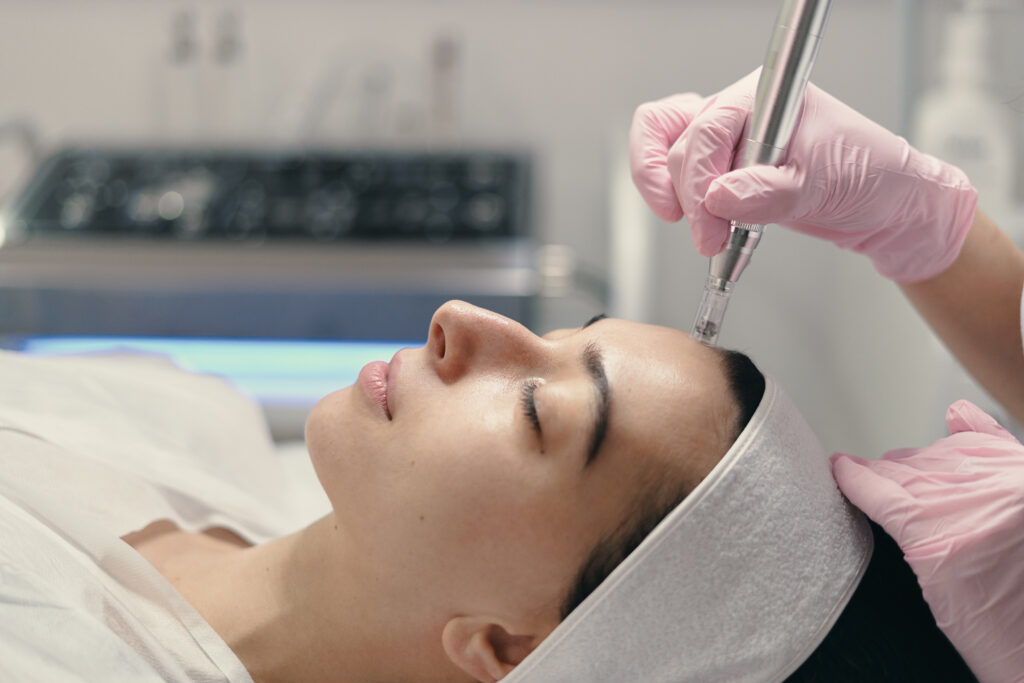
| Nano Infusion Facial | Hydration-focused care and surface refinement | Suitability depends on skin condition and treatment goals |
When a Custom Facial Makes Sense
A custom facial is often a sensible introduction for someone who does not know which treatment to choose. It allows the practitioner to evaluate dryness, oiliness, congestion, shaving sensitivity, and texture before selecting the appropriate steps.
When More Targeted Exfoliation May Be Appropriate
If surface roughness or uneven-looking tone is the primary concern, a practitioner may discuss professional dermaplaning or other exfoliation options. Dermaplaning uses a specialized blade to remove superficial dead cells and fine vellus hair. It is different from ordinary beard shaving and is not automatically suitable for coarse beard-bearing areas, active breakouts, or irritated skin.
For a broader comparison of professional treatments, read Éternité’s guide to choosing the right spa treatment.
Considering Your First Facial?
You do not need an established skincare routine to begin professional care. A first appointment can help clarify whether your skin would benefit most from gentle maintenance, hydration, or a more targeted approach.
Éternité Spa takes a personalized, skin-first approach, with individual appointments and treatment selection guided by professional assessment.
Will a Men’s Facial Hurt or Leave Your Skin Red?
Most basic cleansing and hydrating facial steps are comfortable. You may feel gentle massage, cool products, warm towels, or mild sensations associated with selected treatment ingredients. Extractions, stronger exfoliation, and certain active ingredients may produce temporary discomfort or redness.
Some clients leave with skin that looks refreshed and feels smoother. Others may experience temporary pinkness, particularly following exfoliation. Visible redness is not proof that a treatment worked. Effective skincare should respect skin tolerance rather than deliberately create irritation.
Florida Weather Makes Daily Maintenance More Important
Living in Central Florida introduces practical skincare considerations. Heat, humidity, sun exposure, and time spent in air-conditioned environments can influence how the skin feels and how products perform.
In New Smyrna Beach, beach activities and outdoor recreation can create additional sun exposure. In Mount Dora, commuting, outdoor work, and recreational activities can present similar concerns. Daily broad-spectrum SPF 30 or higher, appropriate reapplication, and protective habits remain important regardless of whether you receive professional facial treatments.
How to Prepare Without Overcomplicating Your Routine
A few practical steps can make the appointment more useful:
- Avoid aggressive scrubs or experimenting with unfamiliar skincare products shortly before your visit.
- Ask about temporarily pausing retinoids, exfoliating acids, or other strong active ingredients prior to your appointment.
- Tell your esthetician about recent shaving, sunburn, sensitivity, or previous reactions to skincare products.
- Share any relevant skin conditions, medications, or recent professional procedures.
- Avoid arriving with actively sunburned or severely irritated skin without first checking whether your appointment should be rescheduled.
What Your Skin Needs After the Appointment
The hours following a facial are not the time to introduce several new skincare products. A simple routine of gentle cleansing, appropriate moisturizer, and sun protection helps support the skin as it settles.
Éternité provides further practical guidance in its article on what to do after a professional facial, including common mistakes that may contribute to post-treatment irritation.
How Often Should Men Get a Facial?
There is no universal schedule that suits every man. For ongoing maintenance, Éternité Spa’s custom facial guidance suggests considering appointments approximately every four to six weeks. This is a general maintenance recommendation rather than a strict requirement.
A Practical Skincare Routine Between Facials
Better maintenance rarely requires a complicated collection of products:
Morning: Cleanse, Moisturize, Protect
Use a gentle cleanser suited to your skin, followed by a moisturizer when needed. Finish with broad-spectrum sunscreen, SPF 30 or higher. If shaving in the morning, use a moisturizing shaving product and avoid excessive pressure.
Evening: Remove the Day’s Buildup
Cleanse away sunscreen, sweat, surface oil, and daily debris. Follow with moisturizer to help maintain skin hydration.
Frequently Asked Questions
Are facials worth it for men?
Facials can be worthwhile for men who want professional guidance with cleansing, hydration, surface texture, or skincare maintenance. A facial can complement a good home routine, but it is not a substitute for medical treatment when dealing with persistent acne or infections.
Do I need to be clean-shaven before a facial?
No. A beard or mustache does not automatically prevent you from receiving a professional facial. The practitioner can adapt the treatment around facial hair and focus on accessible skin areas. Avoid shaving immediately beforehand if it commonly causes irritation.
Can a men’s facial help with blackheads and clogged pores?
A professionally selected facial may help improve the appearance of surface congestion through appropriate cleansing, exfoliation, and, where indicated, careful extraction. Ongoing care and suitable home products are usually needed to manage recurring congestion.
How long does a men’s facial take, and is there downtime?
Duration depends on the treatment selected. Éternité Spa lists its custom facial treatments at approximately 30 to 60 minutes, with minimal to no downtime depending on the techniques used. Mild redness or temporary sensitivity may still occur.
Is a men’s facial suitable for sensitive skin?
A customized facial may be suitable for sensitive skin when the practitioner selects gentle products and avoids inappropriate exfoliation. Sharing your skin history during consultation is essential for selecting a cautious treatment approach.
Begin With Your Skin, Not a Complicated Routine
A first facial should leave you with a clearer understanding of your skin’s needs, what may be contributing to irritation or congestion, and which maintenance habits are worth keeping.
At Éternité Spa, professional skin assessment and personalized facial care are available in New Smyrna Beach and Mount Dora, Florida. Request an appointment with Éternité Spa and begin with a professional conversation about your skin.