Choosing between advanced skin resurfacing treatments can be confusing when both promise to refine texture and tone. If you are trying to address uneven pigmentation, fine lines, or structural changes, understanding the distinct biological pathways of these modalities is essential. This guide explores the mechanical differences between microneedling and chemical peels to help you choose the best path for your complexion.
Quick Answer
Microneedling utilizes fine needles to create microscopic physical injuries, stimulating the body’s natural collagen production to address structural concerns like acne scars and skin laxity. Chemical peels use customized acid solutions to dissolve the bonds between surface cells, making them highly effective for clearing hyperpigmentation, active congestion, and superficial dullness. Neither treatment is universally superior; the best choice depends entirely on whether your skin requires deep physical remodeling or targeted chemical exfoliation.
Key Takeaways
- Microneedling targets structural tissue repair by stimulating collagen and elastin deep within the dermis.
- Chemical peels focus on surface cellular turnover, effectively lifting away stubborn pigment and rough texture.
- Your natural baseline, sensitivity, and tolerance for downtime determine the right choice.
- Nano infusion offers a gentler, zero-downtime alternative to traditional microneedling by targeting only the skin’s uppermost layer.
Understanding the Biological Differences
The Mechanics of Microneedling
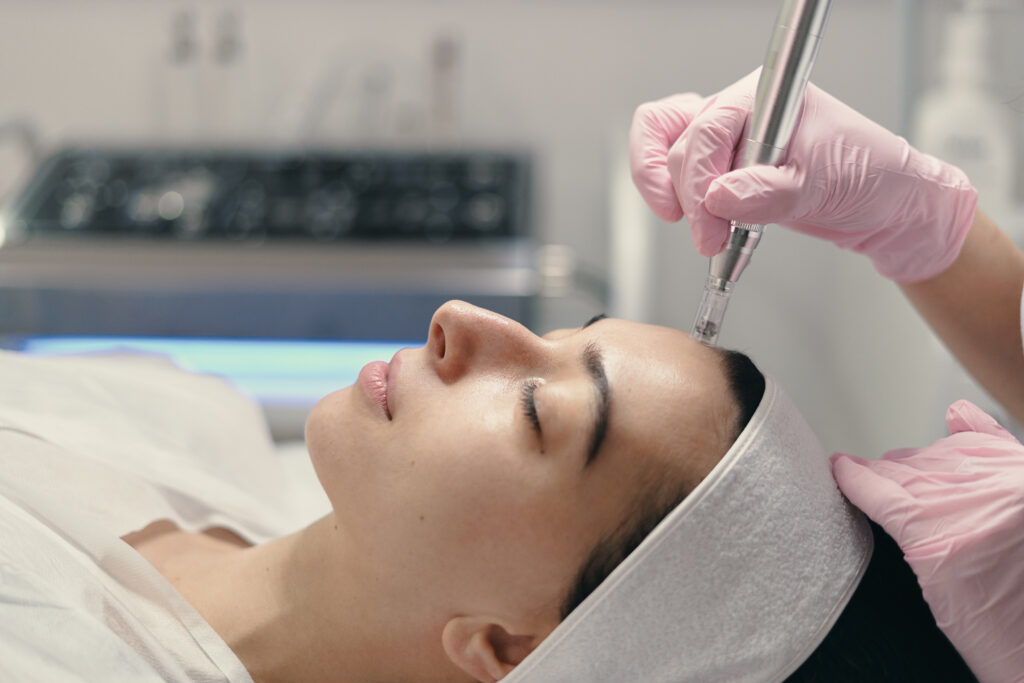
Traditional microneedling is a physical modality that triggers the body’s wound-healing cascade. By stamping tiny, sterile needles into the skin, the treatment forces the tissue to generate new collagen and elastin fibers as it repairs the microscopic punctures.
Because it focuses on structural regeneration beneath the surface, it is often recommended for people looking to improve the appearance of depressed acne scars, enlarged pores, and general tissue laxity. The Cleveland Clinic notes that this controlled physical trauma is highly effective for long-term dermal remodeling, though it requires specific physical downtime as the micro-injuries heal.
The Science of Chemical Exfoliation
Conversely, a chemical peel does not rely on physical puncture to achieve cellular renewal. Instead, it uses formulated clinical acids to safely lower the skin’s pH and dissolve the lipids that hold dead skin cells together.
This controlled shedding process removes the damaged outer layers of the epidermis, bringing fresh, unblemished skin to the surface. A professional Chemical Peel Treatment excels at lifting away superficial sun damage, reducing the appearance of melasma, and clarifying an actively congested complexion.
Treatment Comparisons and Ideal Use Cases
When comparing these two approaches, the deciding factor is typically the specific skin concern you are trying to address. If you are dealing with deep textural irregularities, such as atrophic scarring or loss of tissue density, the structural collagen stimulation of microneedling is generally preferred.
If your primary concerns are surface-level, such as dullness, uneven skin tone, or superficial hyperpigmentation, a chemical peel is often the more efficient choice. According to the American Academy of Dermatology, peels are particularly effective at evening out skin color and quickly restoring a smooth, light-reflective surface.
For those seeking deep hydration and plumping without the intense downtime of traditional microneedling, a Nano Infusion Facial presents an excellent alternative. This advanced treatment creates microscopic channels only in the very top layer of the epidermis, safely delivering restorative serums into the skin with no recovery time.
Environmental Considerations and Downtime
Both modalities leave the newly exposed or healing skin highly vulnerable to environmental stressors. In Central Florida, intense UV exposure and fluctuating humidity must guide your recovery protocol.
After either a chemical peel or a traditional microneedling session, strict sun avoidance and diligent broad-spectrum sunscreen use are mandatory to prevent post-inflammatory hyperpigmentation. Because the Florida sun is unforgiving, many people schedule deeper resurfacing treatments during the cooler months and rely on gentler maintenance facials throughout the summer.
Professional Assessment and Candidacy
Choosing the right modality should never be a matter of remote guesswork. Factors such as your Fitzpatrick skin type, current barrier health, and history of active breakouts heavily influence whether a physical or chemical approach is safer for your tissue.
People with active, inflamed acne should generally avoid microneedling, as the needles can spread bacteria and worsen infection. In these cases, a targeted salicylic acid peel is a safer, more effective option for clearing congestion.
Conversely, individuals with highly reactive or sensitive skin may not tolerate strong chemical acids well. Adhering to a measured, clinical skin philosophy means always seeking an in-person evaluation to map your unique skin concerns before choosing a definitive path.
Schedule Your Clinical Skin Consultation
Selecting the right resurfacing treatment requires a deep understanding of your cellular health, daily environment, and aesthetic goals. You do not have to navigate this decision alone.
Schedule a consultation at Éternité Spa in New Smyrna Beach or Mount Dora. Our licensed estheticians will carefully analyze your complexion and recommend the precise clinical modality needed to safely reveal a smoother, more radiant texture.
Frequently Asked Questions
Can I alternate between microneedling and chemical peels?
Yes, you can often alternate these treatments to address both deep structural concerns and surface-level texture. However, space them appropriately, usually four to six weeks apart, to allow the skin barrier to fully heal and regenerate between sessions.
Which treatment is better for acne scars?
For deep, atrophic acne scars that create textural depressions in the skin, microneedling is generally the superior choice because it stimulates collagen deep within the dermis. Chemical peels are better suited for treating the flat, red, or brown hyperpigmentation marks left behind after a breakout heals.
Do these treatments hurt?
A professional chemical peel typically causes a brief, mild tingling or warming sensation that subsides quickly. Traditional microneedling can be moderately uncomfortable, so a topical numbing cream is usually applied beforehand; however, lighter alternatives like nano infusion are painless.
Which treatment has a longer recovery time?
Recovery time depends heavily on the treatment depth. A superficial chemical peel or nano infusion facial may cause mild dryness for 0 to 2 days, while deep microneedling or a moderate-depth peel often causes visible redness or flaking for 3 to 7 days.
Are chemical peels safe in the Florida sun?
Yes, chemical peels are safe in sunny climates if you strictly follow professional aftercare. Avoid direct, prolonged sun exposure, and apply a high-quality, broad-spectrum SPF daily to protect vulnerable new skin from UV damage and hyperpigmentation.