The skincare industry is often loud, filled with aggressive promises and treatments that require significant physical downtime. For those seeking long-term skin health without the trauma of needles or scalpels, the approach must be different.
LED light therapy has emerged as a cornerstone of clinical skincare because it works with the body’s natural biology rather than against it. By utilizing targeted light wavelengths, this therapy supports cellular repair from the inside out.
This article explains the science behind LED light therapy, how different colors target specific skin concerns, and why this gentle approach is a vital component of advanced facial rejuvenation.
Quick Answer
LED light therapy is a non-invasive skincare treatment that uses varying wavelengths of light, including red, blue, and near-infrared, to trigger natural cellular responses. It does not contain ultraviolet (UV) rays and does not damage the skin. By stimulating cellular energy, professional LED treatments can help improve the appearance of fine lines, calm inflammation, and target acne-causing bacteria, providing gradual, compounding results without any physical downtime.
Key Takeaways
- LED therapy uses specific visible light wavelengths to support cellular repair and reduce inflammation.
- Red light is typically used to support collagen production, while blue light targets acne-causing bacteria.
- Professional clinical devices offer significantly higher power outputs than at-home masks, leading to more consistent results.
- The treatment is entirely non-invasive, painless, and safe for all skin types, requiring zero recovery time.
Understanding the Science of Light Therapy
LED (light-emitting diode) therapy was originally researched by NASA for its ability to promote wound healing in zero-gravity environments. Today, it is a widely recognized dermatological treatment designed to trigger specific biological processes within the skin.
Unlike laser treatments that create controlled thermal damage to stimulate healing, LED therapy is completely non-ablative. It does not heat the tissue or remove the surface layer of the skin. Instead, the light energy is absorbed by receptors in the mitochondria, the powerhouses of your cells, stimulating them to produce more adenosine triphosphate (ATP).
This increase in cellular energy allows the skin to repair itself more efficiently. According to the Cleveland Clinic, LED therapy is a safe, UV-free method that may help reduce fine lines, calm inflammation, and treat mild to moderate acne when used consistently.
How Different Wavelengths Support the Skin
The effectiveness of LED therapy depends entirely on the wavelength, or color, of the light used. Each wavelength penetrates the skin at a different depth, addressing distinct clinical concerns.
Red Light for Structural Support
Red light penetrates the outer layer of the skin, reaching the fibroblasts responsible for producing collagen and elastin. As we age, the production of these structural proteins naturally slows down.
By stimulating fibroblast activity, red LED therapy can help support the skin’s underlying architecture. Over time, a series ofLED Light Therapy sessions may improve the appearance of fine lines, reduce overall redness, and create a smoother, softer surface texture.
Blue Light for Clarification
Blue light remains closer to the surface of the skin, where it specifically targets Cutibacterium acnes, the bacteria responsible for most acne breakouts.
Because the blue wavelength can neutralize these bacteria and help regulate excess oil production, it is highly effective for managing congested skin. The Mayo Clinic notes that this specific wavelength can help reduce breakouts and promote a clearer complexion without the use of harsh topical chemicals.
Near-Infrared Light for Deep Tissue Repair
Near-infrared light penetrates the deepest of all the therapeutic wavelengths, reaching the dermis and even the subcutaneous layer. This wavelength is invisible to the naked eye but is incredibly powerful for accelerating cellular healing.
It is frequently utilized to reduce deep tissue inflammation, calm rosacea flare-ups, and support the skin’s recovery following more intensive environmental exposure or physical procedures.
Professional Devices Versus At-Home Masks
With the rise of at-home LED masks, many wonder if visiting a clinic is still necessary. While at-home devices can be a helpful addition to a daily routine, there is a significant difference in clinical capability.
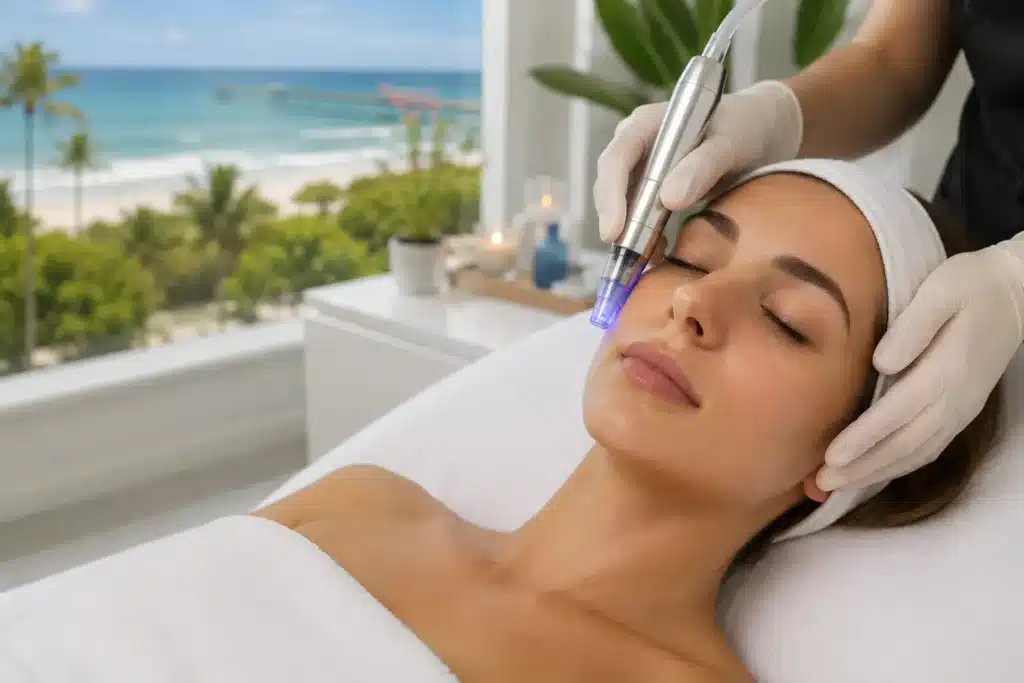
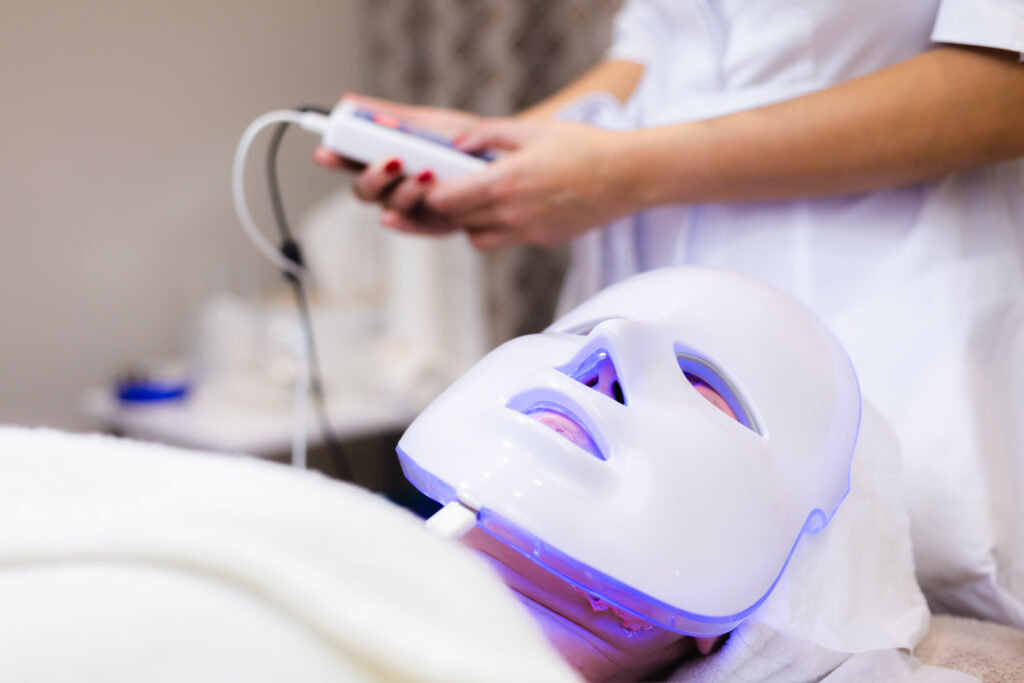
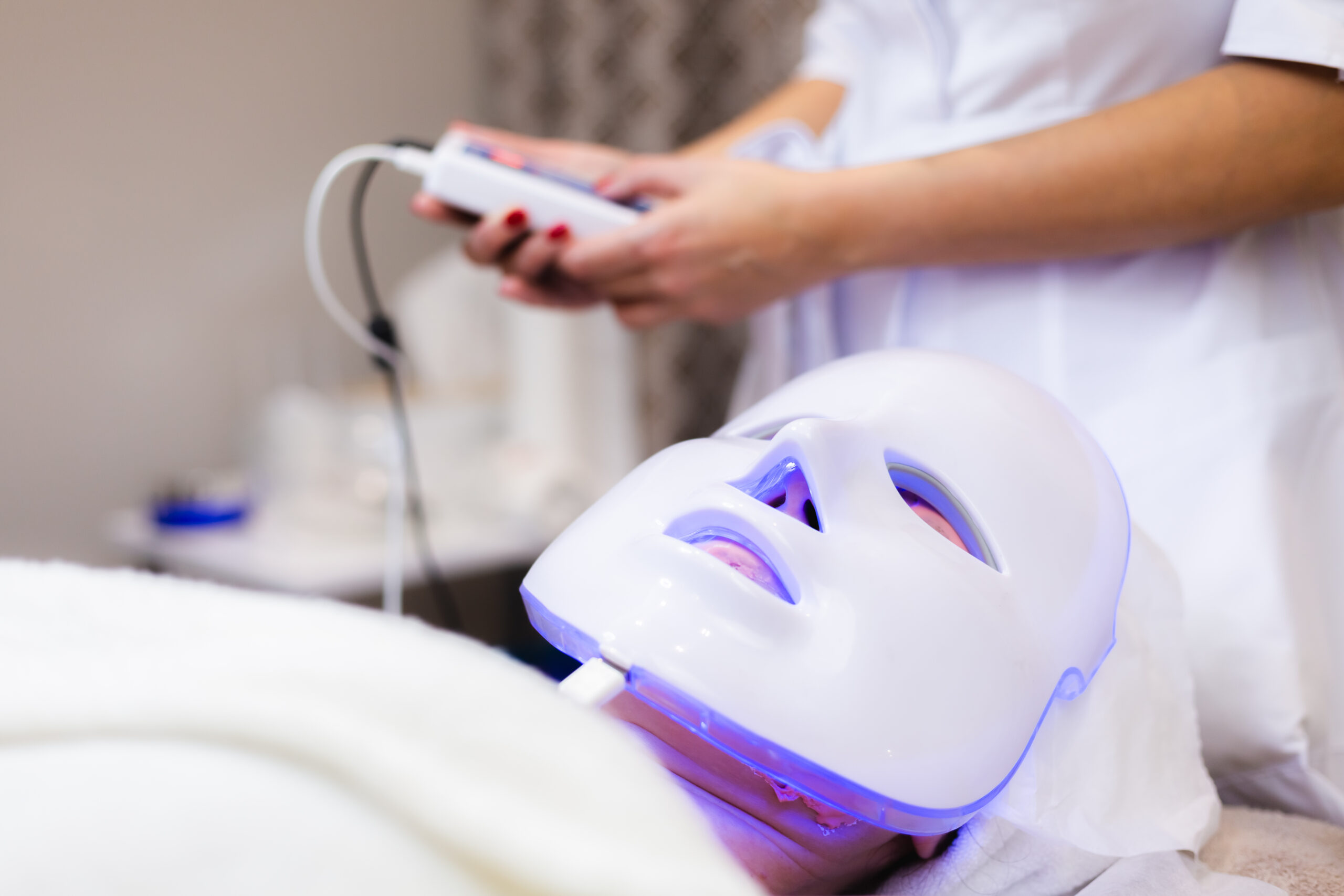
Professional LED panels used in medical spas output light at a much higher intensity and consistency. A clinical device can deliver the precise dosage of energy required to trigger cellular change in a single 20-to-30-minute session. Because of their lower power output, at-home masks typically require daily use over several weeks to achieve even a fraction of the same biological response.
Furthermore, an esthetician can continuously adjust the wavelengths used during a professional session based on how your skin presents that day, ensuring your treatment evolves alongside your complexion.
Who Is a Good Candidate for Light Therapy?
Because it does not rely on thermal heat or physical abrasion, LED light therapy is exceptionally safe and suitable for almost all skin types and tones. It is particularly beneficial for individuals with reactive or sensitive skin who cannot tolerate chemical peels or physical exfoliation.
However, LED therapy may not be appropriate for everyone. Individuals taking photosensitizing medications, such as isotretinoin or lithium, should avoid light therapy. Additionally, those with a history of certain inherited eye diseases or light-triggered skin conditions should always seek professional medical clearance first.
As with any advanced aesthetic treatment, a thorough consultation for skin concerns is the best way to determine if this modality aligns with your unique health profile.
A Clinical Philosophy Built on Patience
At Éternité Spa, we believe that skin is patient. Transformative, healthy skin does not require aggressive intervention to see improvement. Time and consistency are the true active ingredients in any sophisticated skincare plan.
In our Central Florida studios, LED therapy is often integrated into broader protocols, such as a Non-Surgical Face Lift, to compound clinical results without inducing trauma. By prioritizing our clinical skin philosophy, we ensure that every session leaves your complexion stronger, calmer, and naturally radiant.
Frequently Asked Questions
Does LED light therapy hurt?
No. The treatment is completely painless and non-invasive. Because the diodes do not emit UV rays or thermal heat, you will simply feel a mild, relaxing warmth on your skin during the session.
How long does it take to see results?
While some clients notice an immediate calming of redness and a subtle glow after one session, LED therapy is fundamentally a cumulative process. Significant structural improvements, such as enhanced firmness and reduced acne, typically require a consistent series of treatments over several weeks.
Is LED light therapy safe for dark skin tones?
Yes. Unlike certain laser therapies that target melanin and carry a risk of hyperpigmentation, LED light therapy is generally safe for all Fitzpatrick skin types. A licensed professional will evaluate your skin to ensure the proper wavelengths are used safely.
Can I combine LED therapy with other treatments?
Absolutely. LED therapy is incredibly versatile and is frequently used immediately following physical exfoliation, such as a Dermaplaning Facial, to accelerate healing, calm potential inflammation, and enhance overall cellular rejuvenation.
Do I need to wear sunscreen after an LED session?
Yes. While LED therapy itself does not increase photosensitivity or damage the skin barrier, protecting your skin from the harsh Florida sun is crucial to preserving your results. Daily application of broad-spectrum SPF prevents UV damage from reversing the cellular benefits achieved during your session.
Schedule Your Clinical Skin Reading
Real results compound over time, and consistency is the key to maintaining a resilient complexion. If you are ready to explore how medical-grade technology can elevate your cellular health, we are here to guide you.
We invite you to book a clinical skin reading at Éternité Spa in New Smyrna Beach or Mount Dora. Our expert estheticians will carefully analyze your skin’s unique architecture and design a personalized, unhurried treatment plan tailored to your long-term goals.