
Pigmentation & Dark Spots

Pigmentation develops deeply and lifts gradually. We manage sun damage, hormonal melasma, and post-inflammatory shadowing with a quiet, methodical approach that respects your skin’s natural biology while delivering clinical brightness.
What it looks like
Brown patches and sun damage.
What causes it
UV exposure and hormonal shifts.
What helps
Clinical brightening and daily SPF.
Close-up of a young person’s face showing freckles, natural skin texture, and light redness, with green eyes looking slightly forward.

Why pigment stays.

called melanocytes overproduce melanin in response to UV exposure, hormonal shifts, or localized inflammation, causing the resulting pigment to settle unevenly across the complexion.

The specific depth of the pigment dictates its recovery path. Surface sun damage responds relatively fast, while deeper hormonal melasma sits in lower cellular layers and can easily rebound if treated aggressively. Post-inflammatory marks simply require a highly structured timeline to fully resolve.

Our clinical approach rejects aggressive bleaching or traumatizing resurfacing methods. We focus on safely encouraging cell turnover, calming overactive melanocytes, and establishing strict defense protocols. Daily sun protection is embedded into every single visit because long-term clarity cannot exist without it.

Close-up of a young person’s face showing freckles, natural skin texture, and light redness, with green eyes looking slightly forward.

Five ways pigment shows.

Not every breakout is the same kind of breakout. Naming what we’re seeing changes what we’d reach for.

  • Sun-induced freckling and lentigines

    Small, well-defined brown spots on the face and hands. These stable marks deepen with UV exposure and require targeted clinical peeling to break down effectively.

  • Melasma

    Larger, symmetrical patches triggered by hormonal shifts. These deeply set pigments are highly stubborn and respond best to heat-free, soothing interventions.

  • Post-inflammatory hyperpigmentation

    Stubborn dark marks remaining after acne or skin trauma. These persistent shadows respond beautifully to customized clinical brightening and accelerated cellular turnover.

  • Dull, uneven background tone

    A generalized muddy complexion rather than isolated spots. This widespread shadowing is a sign of slowed cellular renewal, requiring structured exfoliation to restore radiance.

  • Sun damage with texture

    Pigmented patches that display a visibly rough, weathered surface. Resolving this requires combining advanced brightening actives with mild, barrier-safe resurfacing protocols.

Five quiet drivers.

01

Cumulative UV exposure

UVA rays penetrate deeper than basic sunscreens block, accumulating over years. Mineral formulas with iron oxide offer superior clinical defense for pigmentation-prone skin.

02

Hormonal triggers

Pregnancy, oral contraceptives, and perimenopause alter estrogen levels significantly. These hormonal shifts can instantly activate melanocytes, acting as the primary driver for melasma.

03

Inflammation, in any form

Any skin irritation like active blemishes, deep scratches, or aggressive peeling can leave dark pigment behind. Complexions with more natural melanin are particularly prone to this response.

04

Heat

Heat alone can stimulate melanocytes even without direct UV light. Regular exposure to hot yoga, saunas, and prolonged hot showers can quietly worsen stubborn melasma patterns.

05

Aggressive lightening

Misusing hydroquinone, harsh DIY peeling kits, and unregulated brightening products damages barrier function. This trauma triggers a protective rebound response, creating deeper pigment over time.

What we'd reach for.

Each one is a complete arc – preparation, treatment, restoration. We rarely use just one in isolation.

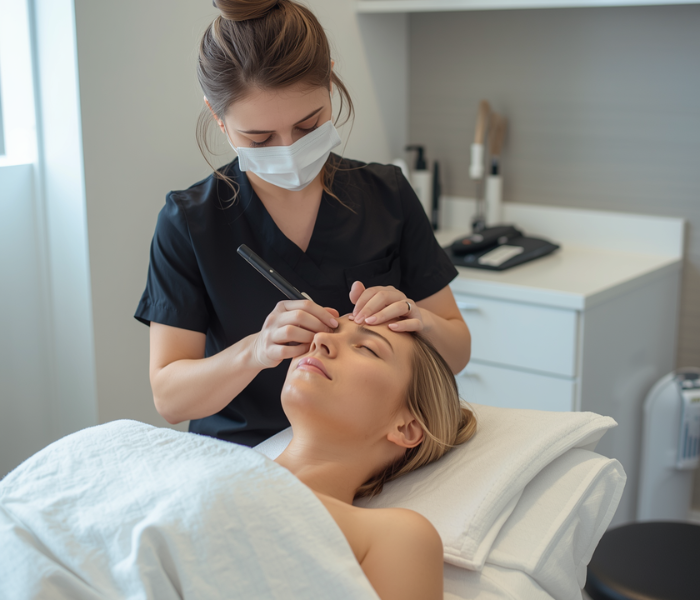
A beautician wearing a face mask shapes a client’s eyebrows with a pencil-like tool while the client lies on a treatment bed with eyes closed.

Non-Surgical Face Lift

Lift, tighten, and rejuvenate your skin – without needles or downtime.
Read more →
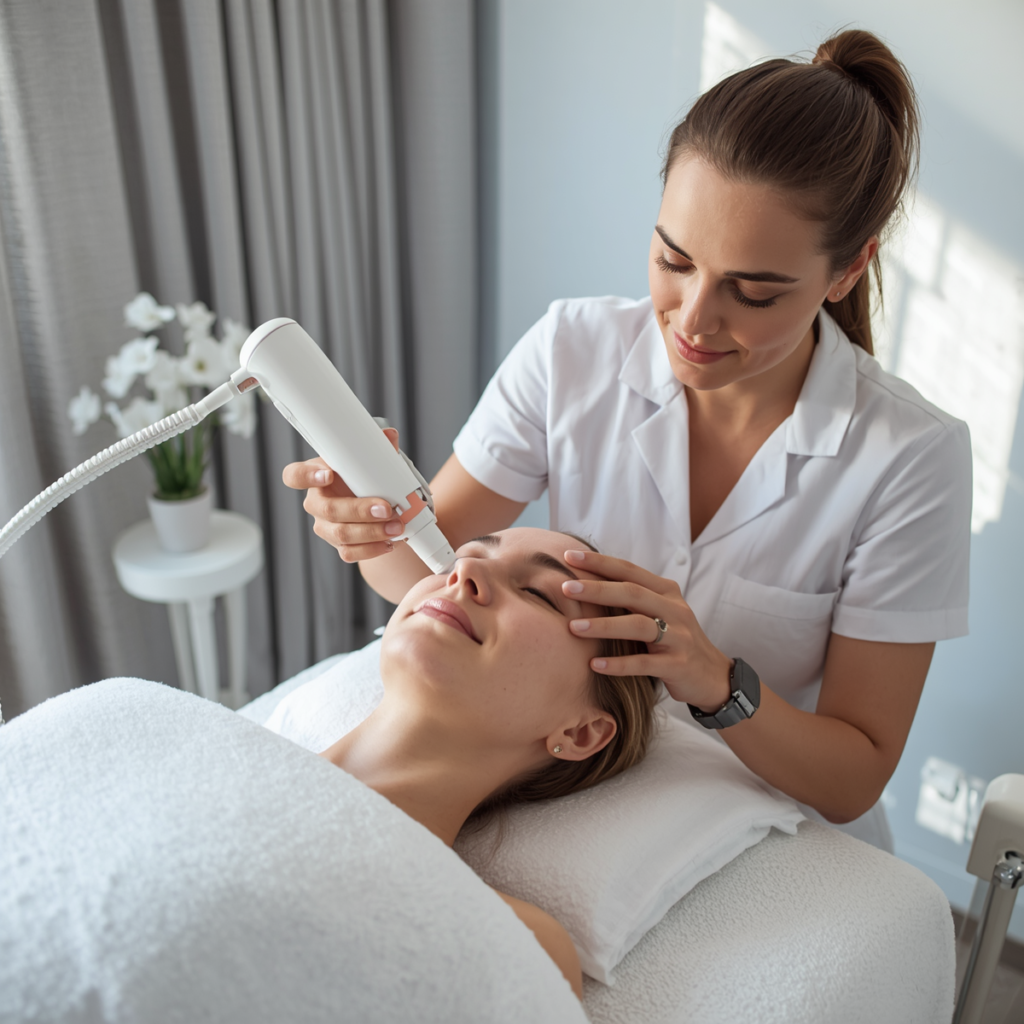
A beautician in a white uniform uses a handheld device on a client’s face while she lies relaxed with eyes closed, covered with a towel.

Nano Infusion Facial

The closest thing to microneedling – without pain or downtime.
Read more →
A client wears an LED light therapy mask while a beautician in a white uniform holds the control device.

LED Light Therapy

Heal, repair, and rejuvenate – with medical-grade light.
Read more →

What changes, when.

01

After your first visit

Subtle brightening.

Skin often looks slightly more luminous and evenly toned. Stubborn, deeply set spots will remain unchanged at this initial stage.

02

Four to six weeks

Surface fade begins.

Lighter sun damage and recent post-inflammatory marks start to soften. Deeper hormonal pigmentation requires more time to lift.

03

Two to three months

Visible shift in tone.

Most clients see a meaningful improvement in overall evenness. Stubborn melasma may require strict sun discipline to keep progressing.

04

Six months and beyond

Maintenance phase.

Visits become less frequent, focusing entirely on stabilizing your results. Daily sun protection remains absolutely non-negotiable.

How a session here differs.

We do not rely on a long list of reasons to choose us. We focus on five core principles, followed consistently during every single visit to ensure absolute clinical excellence.

One room. One guest. One practitioner.

No tag-teams or mid-session handoffs. The specialist who analyzes your skin is the same expert who designs your clinical protocol and guides your long-term recovery path.

We treat what's reacting.

Compromised skin requires a gentle, calculated approach. We pause active treatments when the skin shows signs of distress, focusing on rebuilding and soothing rather than forcing results.

Unhurried by design.

Sessions run sixty to ninety minutes with zero overlap between guests. There are no loud countdowns or visible clocks, ensuring your treatment is as peaceful as it is clinically effective.

Maintenance is part of the protocol.

We build clinical plans around sustainable progress. Your long-term routine is thoughtfully structured to maintain your skin health over time, without pushing unnecessary upsells after the treatment.

No screens, no playlist, no sell.

What you will experience is closer to a quiet, clinical appointment than a commercial spa event. Every element of the studio is curated to eliminate noise, leaving only room for absolute calm.

A practiced hand.

Master Esthetician

Camille Reyes

RF & LED Specialist

Adrienne Caldwell

Body Sculpting Specialist

Sophia Lindgren

Dr.-Micah-Graig-RAVE-Clinics
Medical Director & Longevity Expert

Dr. Micah Craig

Reserve your consultation

One treatment, one room, one hour kept entirely for you. By appointment, in New Smyrna Beach.
A few honest notes.

Most pigmentation needs eight to twelve weeks for visible change with consistent treatment. Melasma can take longer. We recommend planning a six-month arc rather than judging by the first visit.
Without sun protection, yes — usually within months. With daily SPF and a steady routine, gains tend to hold for years. Melasma rebounds more readily than other types.
Yes — we adjust treatment intensity carefully for medium and deeper tones, where over-aggressive treatment can cause more pigmentation than it lifts.
Usually no — those are good allies. We may ask you to pause active acids in the days right before a treatment, but daily-use brightening serums are part of how we hold the gains.
Because it’s hormonal at its root. Treatment can lift it, but the trigger remains. The most effective approach pairs in-studio work with strict sun avoidance.